Independent ingredient reference
Know what’s actually in it.
Most natural-beauty writing tells you an ingredient is wonderful. We tell you what it does in a formula, how likely it is to clog your pores, and exactly where the evidence stops being reliable.
357ingredients rated
28categories
0–5comedogenic scale
Oils and butters most likely to clog pores
Check a whole product →- Wheat Germ OilAmong the highest-rated comedogenic oils.
- Cocoa ButterConsistently high on clinic lists. Better suited to body than face.
- Coconut ButterAs comedogenic as coconut oil. Body use, not face.
- Coconut OilHighly comedogenic despite its reputation as a natural cure-all. Fine on hair and body, a common trigger on acne-prone faces.
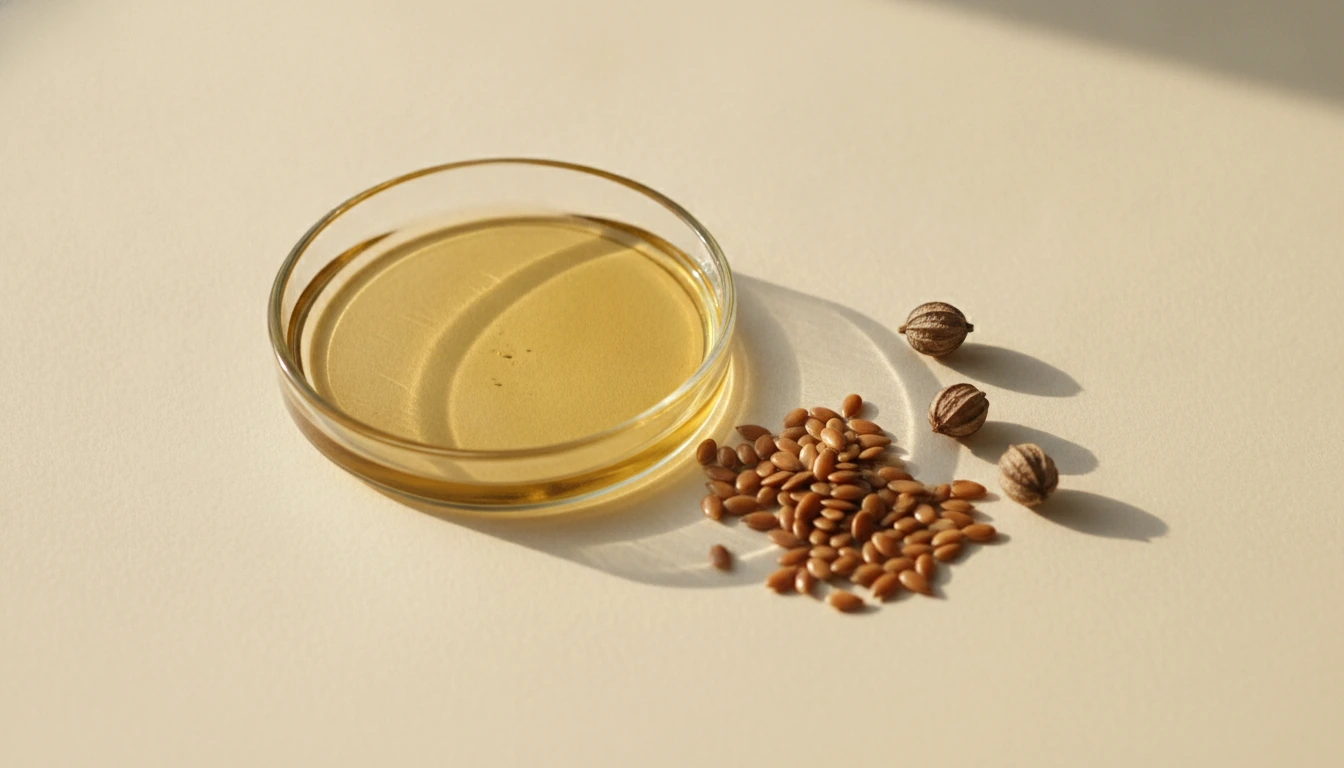
- Flaxseed OilHigh comedogenic rating; also oxidises quickly.
- Palm OilComedogenic, plus significant sustainability concerns.
Non-comedogenic oils and butters
See every oil →- Argan OilNon-comedogenic and high in vitamin E. Safe default for most acne-prone routines.
- Hemp Seed OilHigh in linoleic acid, non-comedogenic. Contains no CBD.
- Safflower OilThe high-linoleic version is non-comedogenic and barrier-supporting.
- Sunflower OilHigh-linoleic sunflower oil supports barrier repair and is non-comedogenic.
- Watermelon Seed OilLight, linoleic-rich, non-comedogenic. Good for oily skin.
- Black Cumin Seed OilThymoquinone content; some evidence for eczema and acne.
Why this site is different
We show our uncertainty
Every comedogenic rating carries an evidence label. Where sources disagree, we say so instead of picking a number and presenting it as fact.
Structured, not padded
Ingredient pages are reference entries, not 2,000-word essays with the answer buried in paragraph nine.
Limits stated up front
Comedogenicity ratings test raw ingredients in isolation. That caveat belongs next to the number, not in the footer.